Utah Water Research Laboratory, Utah State University
Small microbes,
big water questions.
We study the microbes that decide what happens to pollutants in rivers, wastewater and soil, including antibiotic resistance genes, microplastics and toxic algal blooms. Then we put microbes to work turning waste into something worth keeping.
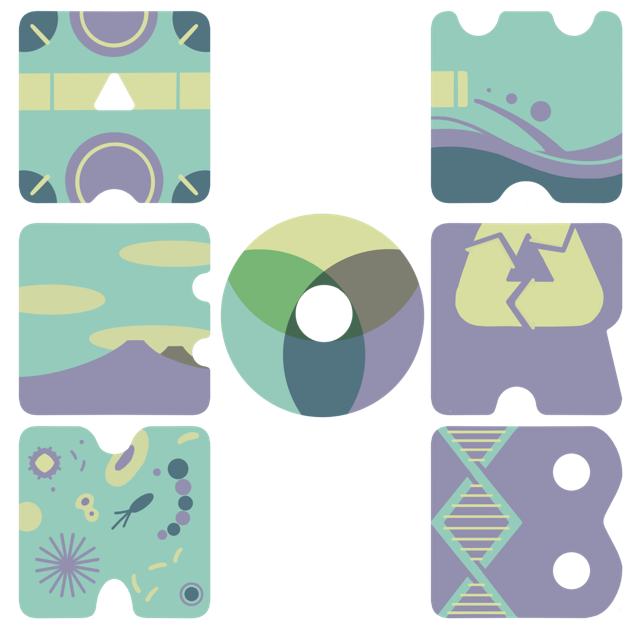
Hover a tile to read the H
Waste
The wastewater pattern: sewage, sludge and the pollutants they carry.
in and via the approach
Research
What we're working on
Two threads run through everything: how microbes and multiple contaminants interact in urban water, and how microbes can break down and valorize waste.
-

Biological contaminants in water
Where antibiotic resistance and toxic blooms come from, how they spread and what drives them.
-

Microplastics and the plastisphere
From which microbes might break plastics down, to how biofilms carry plastics through water and soil.
-

Turning waste into resources
Microbial and algal routes from wastewater and food waste to energy, bioplastics and protein.
Latest news
Fresh from the lab
Papers, grants, awards and new faces, in our own words.
All news since 2022Have a question about the Hou Lab? Our assistant answers from this website, any time.
- Paper
Paper “Comparative study of moxifloxacin removal using Ulva, layered double hydroxide, and their green hybrid nanocomposite supported by DFT mechanistic analysis” published in Scientific Reports.
- Grant
Dr. Hou received a USDA-NIFA grant (# 2025-14360) as PI to investigate nanoplastics in soil-crop systems and the protective role of rhizosphere microbes!
- Award
Congrats to Peerzada Madany on taking First Place in the IBEC 2027 Graduate Poster Competition for his research on how plastic leachates affect seed germination. Thanks to Dr. Kyle Moor’s group for collaborating!
- In the media
USU Engineering spotlights how the Hou and Young labs pair hyperspectral drone imagery with water sample analysis to develop faster ways to detect harmful algal blooms and identify the species behind them in Utah Lake (watch the video).
- Grant
Dr. Hou received a USDA-NIFA grant (# 2025-14083) as Co-PI to convert food waste into single-cell protein using microbial electrochemical systems!
- Paper
Paper “Biosorption of synthetic dyes by live and dried marine diatom Phaeodactylum tricornutum and freshwater diatom Navicula cryptocephala var. veneta” published in Frontiers in Microbiology.
A Hou Lab project, open to everyone
Seen something green in the water? Ask AlgaeAI.
Identify algae and diatoms from a microscope image or a bloom photo, and help train better tools for spotting toxic blooms.