
Research
Microbes, contaminants
& the systems between
We investigate and harness functional microbial communities to protect water quality and recover resources in engineered and natural systems. Using genome sequencing, metabolic engineering and metabolite analysis, we ask how contaminants interact with microbes, and then use what we learn to remove or valorize them.

Since 2014
Biological contaminants in water
Where antibiotic resistance and toxic blooms come from, how they spread and what drives them.
This line began with the microbial ecology of rivers, estuaries and wastewater treatment plants in southeast China, looking at how pollution reshapes the communities living there. From there the focus moved to antibiotic resistance genes as contaminants in their own right. Storms, fecal pollution and urban ponds all help spread them, and wastewater plants assemble their own resistome. In Utah the work continues in wastewater plants and reservoirs. We look at how microplastics, pharmaceuticals and heavy metals together shape resistance, which multidrug-resistant bacteria make it through treatment, and how to detect toxin-producing cyanobacteria quickly during harmful algal blooms. The same water connects people, animals and the environment, which makes this a One Health question.
From the papers
- 2014
- Distribution of potential pathogenic bacteria in the Jiulong River WatershedEnvironmental Science
- 2017
- 2019
- 2021
- Urban ponds as hotspots of antibiotic resistome in the urban environmentJournal of Hazardous Materials
- 2022
- Storm Promotes the Dissemination of Antibiotic Resistome in an Urban Lagoon Through Enhancing Bio-InteractionsEnvironment International
- Seasonal hydrological dynamics govern lifestyle preference of aquatic antibiotic resistomeEnvironmental Science and Ecotechnology
- 2023
- Mass-immigration shapes the antibiotic resistome of wastewater treatment plantsScience of the Total Environment
- 2025
- Innovative Multiplex qPCR Method for Rapid and Reliable Detection of Microcystin-Producing Genes during Harmful Algal Blooms: Insights from Utah ReservoirsWater Research
- From Wastewater to Resistance: Characterization of Multidrug-Resistant Bacteria and Assessment of Natural Antimicrobial CompoundsFrontiers in Microbiology
- 2026
- Combined roles of microplastics, PPCPs, and heavy metals in shaping antibiotic resistance genes of Utah wastewater treatment plantsChemical Engineering Journal
- Cross-regional Metagenomic Insights into Clinical and Stable Resistomes in Urban Wastewater SystemsJournal of Hazardous Materials
A Hou Lab project, open to everyone
Seen something green in the water?
Ask AlgaeAI.
AlgaeAI identifies algae and diatoms from a microscope image or a photo of a bloom. It gives a confidence score, flags species that can produce toxins, and adds ecological notes. It grows out of our harmful-algal-bloom work, and it gets better every time someone shares a verified image.
- 01Try it. Upload a microscope image or bloom photo. You can try it before creating an account.
- 02Contribute. Sign in to submit your own algae and diatom records to the community database.
- 03Help us learn. Your submissions help train better tools for spotting toxic blooms early.
Opens algaeai.vercel.app. Submitting records requires signing in there.

Since 2021
Microplastics and the plastisphere
From which microbes might break plastics down, to how biofilms carry plastics through water and soil.
Two 2021 papers opened this line: a review of how microplastics can be converted and removed in wastewater plants and landfills, and a survey of which environmental microbes could degrade polystyrene. Since then the lab has asked what microplastics do to living things, from the gut microbiome of fish to the growth and toxin production of bloom-forming cyanobacteria. We also study the biofilms that grow on plastics (the "plastisphere") and how they change where plastics end up, using machine learning to find the microbial interactions behind plastic degradation. Current projects follow biofilm-coated microplastics in turbulent flow, and nanoplastics in soil-crop systems, where we ask whether rhizosphere microbes protect the plants.
From the papers
- 2021
- 2022
- 2025
- 2026
- Now

Since 2020
Turning waste into resources
Microbial and algal routes from wastewater and food waste to energy, bioplastics and protein.
Earlier work on anaerobic membrane bioreactors looked at which methanogens keep low-strength wastewater treatment running, and at how dairy acid whey can become the bioplastic polyhydroxybutyrate. The lab now couples anaerobic digestion with electrochemical systems, studies how electroactive bacteria move electrons outside the cell, and puts diatoms and other algae to work taking up dyes, antibiotics and nutrients. What is left over is biomass worth recovering, including biodiesel in a zero-waste process. A new project converts food waste into single-cell protein with microbial electrochemical systems.
From the papers
- 2020
- Specific affinity and relative abundance of methanogens in acclimated anaerobic sludge treating low-strength wastewaterApplied Microbiology and Biotechnology
- 2021
- 2023
- Diatoms in wastewater treatment: Potentials, applications, and values of biomassCritical Reviews in Environmental Science and Technology
- 2024
- Energy and Economic Assessment of Hydrothermal-Treatment-Coupled Anaerobic DigestionRenewable and Sustainable Energy Reviews
- Co-occurrence of direct and indirect extracellular electron transfer mechanisms during electroactive respiration in a dissimilatory sulfate reducing bacteriumMicrobiology Spectrum
- 2026
- Zero-waste biotechnological approach: bioremediation of oxytetracycline and congo red using Chlorella vulgaris biomass with subsequent biodiesel recovery3Biotech
- Role of electrochemical systems operational parameters on bioelectrochemical anaerobic digestion coupled with compact electrode assembliesBiomass and Bioenergy
- Biosorption of synthetic dyes by live and dried marine diatom Phaeodactylum tricornutum and freshwater diatom Navicula cryptocephala var. venetaFrontiers in Microbiology
- Comparative study of moxifloxacin removal using Ulva, layered double hydroxide, and their green hybrid nanocomposite supported by DFT mechanistic analysisScientific Reports
- Now
 Facilities
Where the work happens
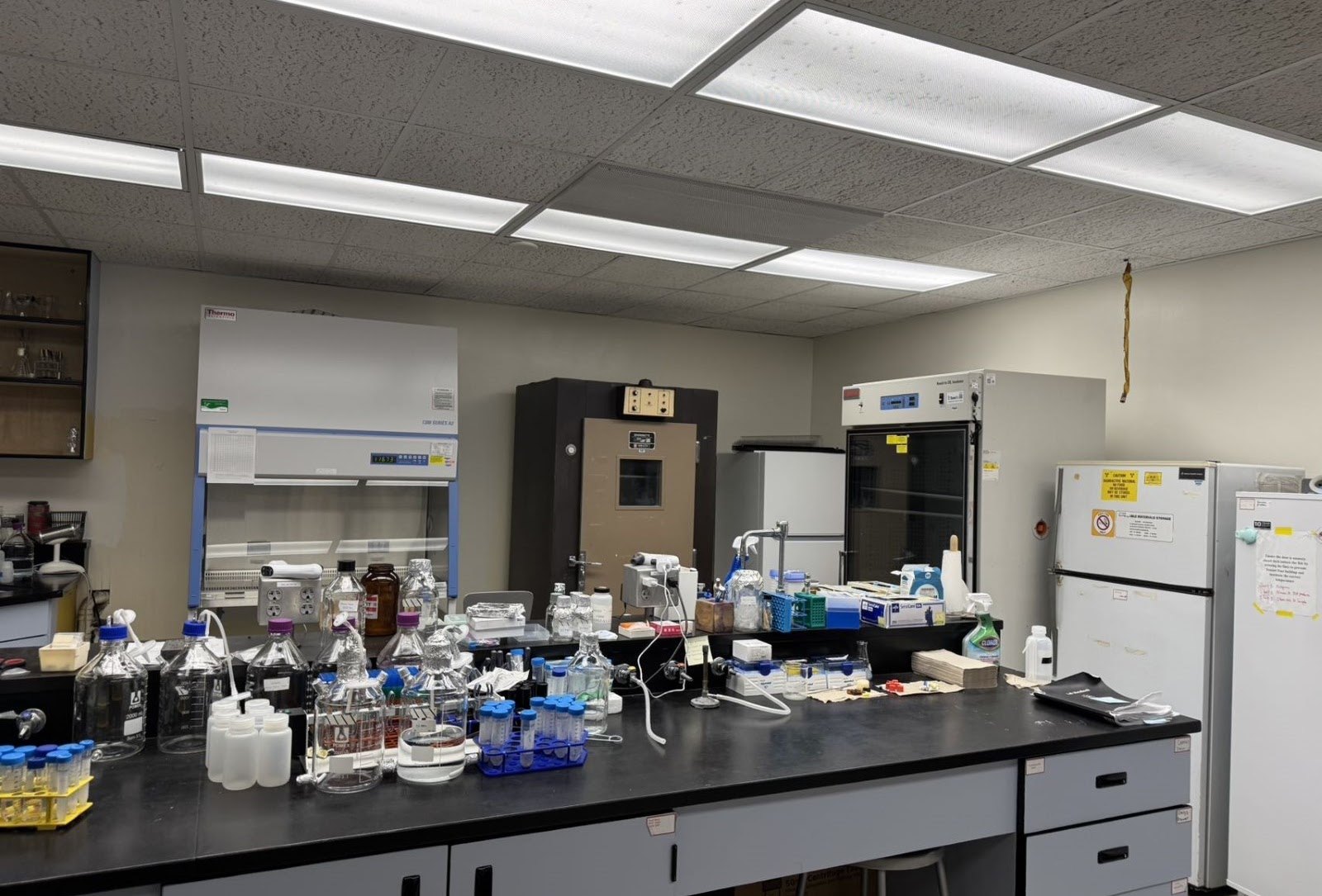
Our lab is located within the Utah Water Research Lab, where we operate in the shared-use Environmental Quality Laboratory equipped with a wide range of advanced analytical instrumentation. We frequently utilize shared-use instruments such as LC-MS-MS, Pyrolysis GC-MS and HPLC to analyze and quantify emerging contaminants.
In our lab
Nucleic acid and protein analysis
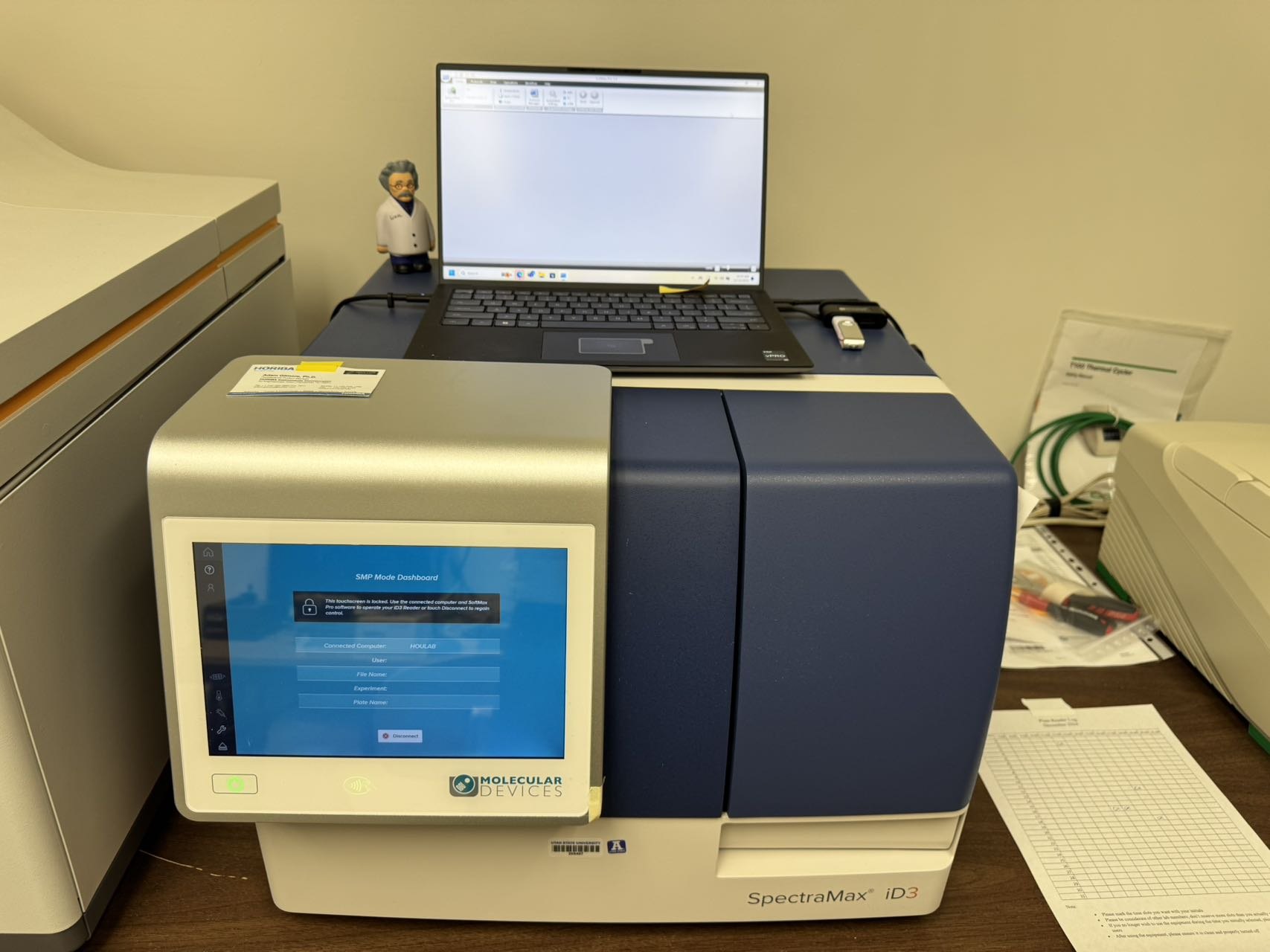
- SpectraMax iD3 Plate Reader
- Bio-Rad CFX Opus 96 qPCR System
- Thermo Scientific NanoDrop 1000
- Thermo Scientific NanoDrop 3300
- UV Workstation
- Electrophoresis System
- Bio-Rad T100 Thermal Cycler
Sample preparation and processing
- Thermo Scientific CO2 Incubator
- Thermo Scientific Legend Micro 21R Centrifuge
- Environmental Control Inc. Laminar Flow Hood
- Plate Centrifuge
- Anaerobic Chamber
- MP FastPrep-24 Bead Beater
Observation, storage and safety
- Autoclave
- Fluorescence Microscope
- Microscope with Digital Screen
- Environmental Control Inc. Laminar Flow Hood
- Revco −80 °C Freezer